VERSA INSTITUTE LONDON
 0 comment
 10 Jul, 2026
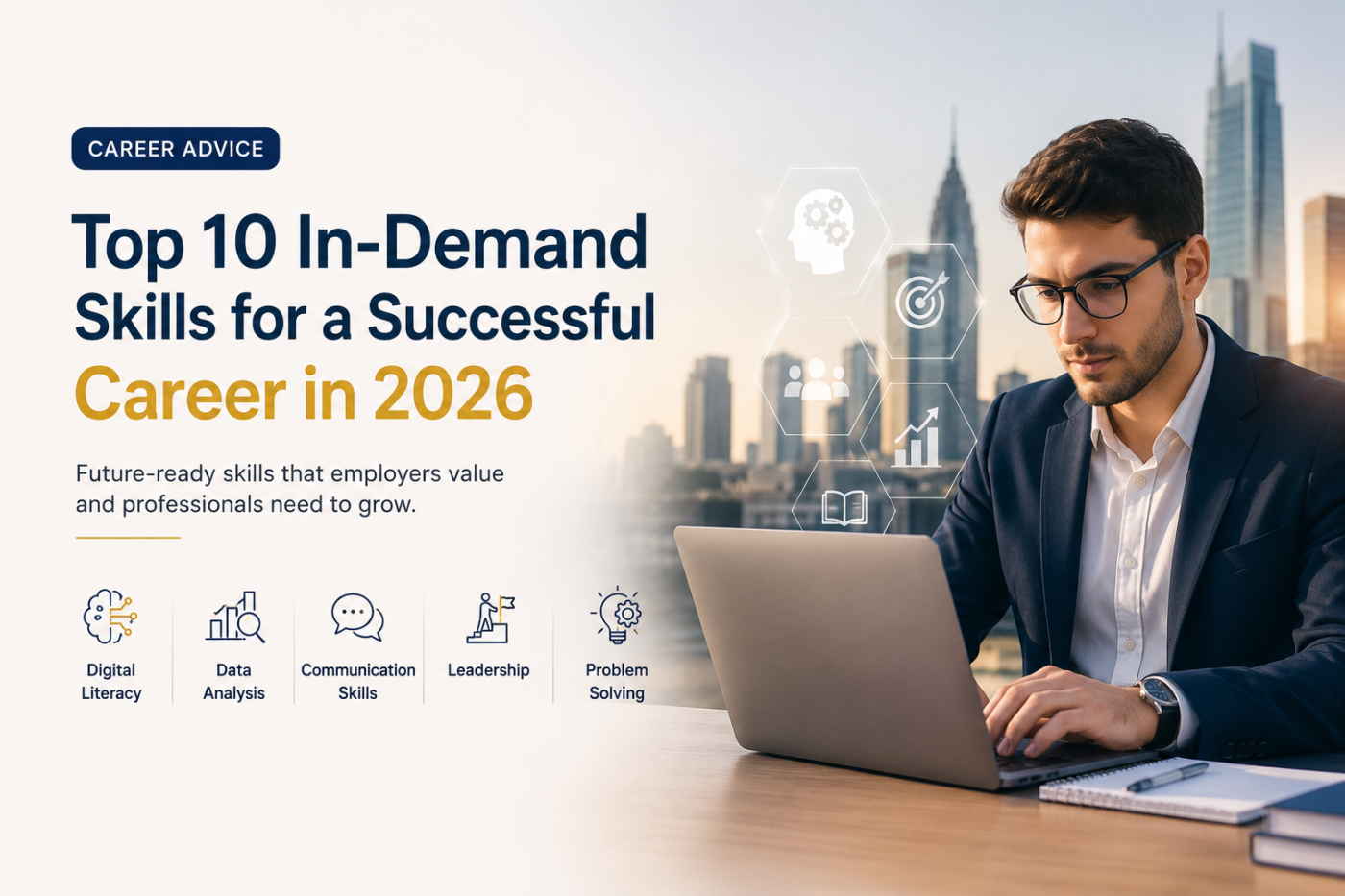
The workplace is evolving faster than ever before. Advances in artificial intelligence, automation, digital transformation, and global collaboration are reshaping the skills employers expect from graduates and professionals alike.
In 2026, academic qualifications remain essential, but they are no longer enough on their own. Employers are increasingly looking for candidates who combine technical expertise with practical workplace skills, adaptability, and a commitment to continuous learning.
Whether you're a university student, a recent graduate, or an experienced professional planning your next career move, developing the right skills today will prepare you for tomorrow's opportunities.
This article explores the ten most valuable skills that employers are actively seeking in 2026 and provides practical advice on how you can begin developing them.
Digital literacy has become a fundamental requirement in almost every profession.
Today's workforce relies on cloud-based applications, collaboration platforms, online communication tools, and digital workflows. Understanding how to use these technologies efficiently improves productivity and enables professionals to work effectively in both remote and office environments.
Developing digital confidence allows individuals to adapt quickly as technology continues to evolve.
Examples include:
Artificial Intelligence is transforming industries including healthcare, finance, education, law, marketing, and business management.
Professionals do not necessarily need to become AI engineers, but understanding how AI tools support decision-making, automate repetitive tasks, and improve productivity has become increasingly valuable.
Employers appreciate candidates who know how to use AI responsibly while maintaining ethical standards and human judgement.
Modern organisations generate enormous amounts of data.
The ability to analyse information, identify trends, and make evidence-based decisions is now one of the most sought-after professional skills.
Critical thinking enables professionals to evaluate problems objectively, question assumptions, and recommend effective solutions.
Strong analytical thinking benefits careers in business, technology, healthcare, education, finance, and public administration.
Effective communication remains one of the most important career skills regardless of industry.
Professionals must communicate clearly with colleagues, clients, managers, and stakeholders through presentations, reports, emails, meetings, and online collaboration.
Excellent communicators are often recognised as future leaders because they can explain complex ideas in a simple and professional manner.
Communication includes:
Every organisation faces challenges that require innovative solutions.
Employers seek professionals who remain calm under pressure, analyse situations carefully, and develop practical solutions rather than simply identifying problems.
Strong problem-solvers improve organisational performance and contribute to business growth.
Developing this skill often involves participating in projects, internships, case studies, and collaborative assignments.
Technology evolves rapidly.
The skills required today may change significantly over the next five years.
Professionals who embrace lifelong learning remain competitive throughout their careers.
Adaptability involves:
Continuous professional development is now considered an essential career investment.
Leadership is no longer reserved for managers.
Organisations value individuals who can motivate others, take initiative, collaborate effectively, and contribute positively within diverse teams.
Successful professionals understand when to lead and when to support others.
Leadership also involves accountability, integrity, and the ability to inspire confidence.
Technical expertise alone does not guarantee career success.
Emotional intelligence enables professionals to understand their own emotions while recognising and responding appropriately to the emotions of others.
Employees with high emotional intelligence often demonstrate:
These qualities contribute to healthier workplace cultures and stronger leadership potential.
Modern businesses operate internationally.
Professionals increasingly work with colleagues, customers, and partners from different countries and cultural backgrounds.
Understanding cultural diversity improves communication, collaboration, and business relationships while creating opportunities for international career growth.
Students who develop a global mindset become more competitive in today's interconnected economy.
Managing multiple responsibilities efficiently is a key indicator of professional maturity.
Employers appreciate individuals who consistently meet deadlines, prioritise tasks effectively, and maintain high standards of work.
Strong time management reduces stress, improves productivity, and demonstrates reliability.
Simple habits such as planning daily activities, setting realistic goals, and eliminating distractions can significantly improve workplace performance.
Building career-ready skills does not happen overnight.
Students can strengthen their employability through practical experiences such as:
Every learning experience contributes to long-term career success.
Higher education should prepare students for more than examinations.
Career-focused learning combines academic knowledge with practical skills that employers value.
By integrating industry-relevant assignments, project-based learning, critical thinking, and professional development into education, students graduate with greater confidence and workplace readiness.
Institutions that emphasise practical learning help bridge the gap between education and employment.
At Versa Institute London, we believe education should empower learners to achieve meaningful career success.
Our programmes are designed to combine recognised UK qualifications with practical knowledge, flexible learning opportunities, and industry-relevant skills that prepare students for today's competitive global job market.
Students studying with Versa Institute London benefit from:
Our mission is to help learners gain the confidence, knowledge, and practical skills needed to succeed in their chosen careers.
The future belongs to professionals who are willing to learn, adapt, and continuously develop their skills.
While qualifications open doors, practical abilities, communication, leadership, and digital competence determine long-term career success.
Investing in these in-demand skills today will not only improve your employability but also prepare you for leadership opportunities in an increasingly competitive global workforce.
No matter where you are in your educational journey, there has never been a better time to invest in your future.
VERSA INSTITUTE LONDON
0 comment